Language Technology in Europe: 24 Official Languages and the Digital Divide
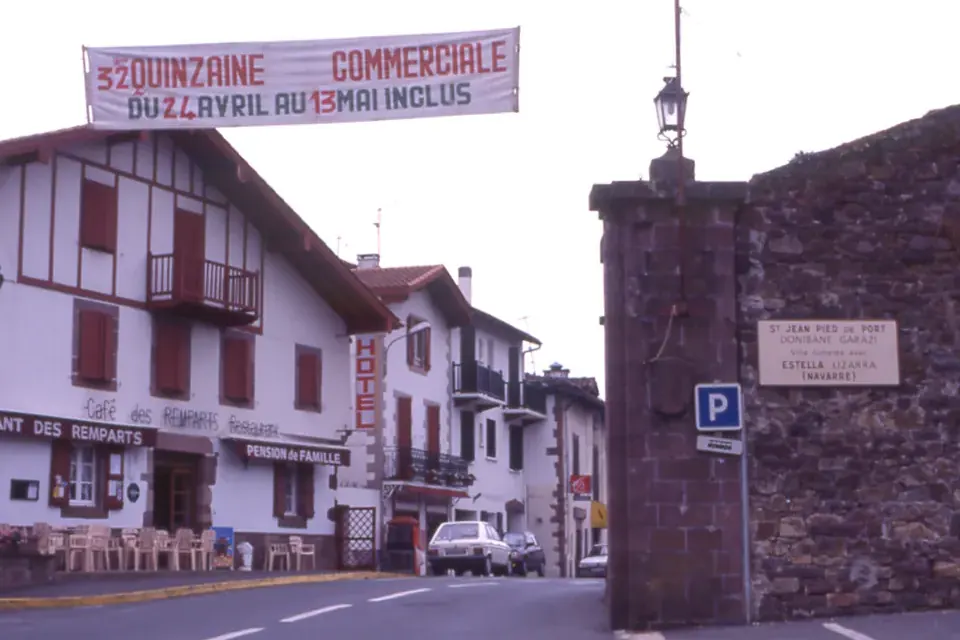
The European Union works in 24 official languages, and Europe as a whole is home to dozens more regional and minority languages. Language technology determines which of them can be used comfortably online, with voice assistants, search engines and translation tools. This guide explains what Europe has diagnosed, funded and built, and where to find the research.
Equal in law, unequal online
Regulation No 1 of 1958, the first regulation adopted by the then European Economic Community, set the languages to be used by its institutions; amended at each enlargement, it now lists 24 official languages, from Bulgarian to Swedish, with Irish fully on the list since 2022. Every citizen may write to the institutions in any of them and receive an answer in the same language, and EU legislation is published in all of them. This produced one of the world's largest bodies of professionally translated text, which in turn became training data for machine translation (see our guide to parallel corpora).
Technology support is far less even. Large languages such as English, German, French and Spanish benefit from commercial investment; smaller official languages such as Maltese, Irish or Latvian have much less data and fewer tools; regional and minority languages such as Basque, Catalan, Welsh, Frisian or the Sámi languages vary widely, depending largely on local policy and community effort.
The diagnosis
In 2012 META-NET, an EU-funded network of research centres, published a series of white papers assessing the state of language technology for some thirty European languages, each written by national experts. Their joint conclusion was that, with English well ahead, most of the languages assessed had weak or fragmentary support and that many faced the risk of "digital extinction", meaning they might not be usable in the digital world in the way their speakers expected.
The European Parliament took up these concerns in a resolution of 11 September 2018 on language equality in the digital age, calling for a large-scale programme to make language technology available for all European languages. The European Language Equality project, funded under Horizon 2020 in 2021–2022, then produced updated reports on the "digital language equality" of dozens of European languages and a strategic research agenda.
What has been built
A shared platform
The European Language Grid project, coordinated by the German Research Center for Artificial Intelligence (DFKI) and funded under Horizon 2020 from January 2019 to June 2022 with an EU contribution of about €7 million, built a cloud platform listing language technology services, datasets and organisations, so that researchers and companies could find and combine tools across languages instead of starting from scratch.
Translation for public services
The Commission's Directorate-General for Translation offers eTranslation, a neural machine translation service trained on EU professional translation data. According to the Commission's page on its AI translation and language tools (consulted October 2026), the tools are available to public administrations, small businesses and the self-employed, academia, non-governmental organisations and some other groups based in the EU or in countries associated with the Digital Europe programme, mostly in all 24 official languages plus several others.
Collecting language data
Since 2015 the European Language Resource Coordination (ELRC) has worked with public administrations in member states to identify and share translated documents and other language data that can improve machine translation for their languages. The Commission has more recently supported a European Language Data Space intended to make it easier for organisations to share language data.
Research grants
Successive framework programmes, from FP7 to Horizon 2020 and Horizon Europe, have funded collaborative NLP projects as well as individual frontier-research grants from the European Research Council, many on multilingual semantics, translation and low-resource languages.
How to look up an EU-funded project
CORDIS, the Community Research and Development Information Service, is the Commission's public record of EU-funded research. Each project has a fact sheet with its full title, acronym, grant number, start and end dates, coordinating institution, funding scheme and EU contribution, and often a results summary and publications. Practical tips:
- Search by acronym and topic, then confirm with the grant agreement number, since acronyms are reused.
- Check the dates. A project's website may outlive its funding, or disappear; CORDIS records the official period.
- Look for the results tab for reports and publications, and follow papers to open repositories such as the ACL Anthology.
- Do not assume a project still exists or that a domain name once used by it is still connected to it.
What remains hard
- Data for smaller languages. Public translations cover formal registers; everyday, spoken and dialectal language is scarce, a problem shared with low-resource languages worldwide.
- Market concentration. General-purpose models are mostly developed outside Europe and optimised for large markets; European initiatives to build open multilingual models are relatively recent.
- Sustainability. Many resources were built by time-limited projects; keeping data, tools and lexical resources such as wordnets (see multilingual lexical knowledge bases) maintained after funding ends is a recurring problem.
- Everyday use. Mobile citizens, from students to workers moving for a job, rely on general-purpose translation tools for practical documents; our guide for tenants who rely on online translators shows where those tools need checking.
Sources
- Regulation No 1 determining the languages to be used by the European Economic Community, 1958, as amended.
- META-NET White Paper Series "Europe's Languages in the Digital Age", Springer, 2012, and the accompanying META-NET press release, September 2012.
- European Parliament resolution of 11 September 2018 on language equality in the digital age (2018/2028(INI)).
- CORDIS, European Language Grid (grant agreement 825627), fact sheet consulted October 2026.
- European Commission, Directorate-General for Translation, AI translation and language tools, page consulted October 2026.
- European Language Equality project, reports 2022 (european-language-equality.eu).
 Multilingual & low-resource
Parallel corpora
From the Canadian Hansard and Europarl to EU translation memories and web-mined bitext: the translated text behind machine translation, and its pitfalls.
 Multilingual & low-resource
Low-resource languages in NLP
Most of the world's 7,000-plus languages have almost no digital data. What that means for NLP, why web crawls fail them, and what actually helps.
 Multilingual & low-resource
Multilingual lexical knowledge bases
WordNets, BabelNet, Wikidata and ConceptNet: how meanings are linked across languages, what NLP uses them for, and where they fall short.